摘要
在人工智能汹涌发展的当下,个人学习与知识组织的传统模式正经历前所未有的变革。本文基于对前沿理论、实践案例、技术进展及未来趋势的深度分析,阐释了AI如何赋能个体学习者,重塑知识管理流程,同时也剖析了随之而来的“幻觉”、偏见、伦理等挑战。文章详细探讨了深度研究、推理模型、自动化工作流等核心技术如何应对这些挑战、提升AI能力,并深入分析了AI对教育模式和学习理论的深远影响。最后,本文提出了在AI时代构建人机协同的学习与知识体系、培养批判性思维与AI素养、以及负责任地进行知识治理的关键策略与未来展望。通过丰富的原创图解,旨在为读者提供一个清晰、深入且富有洞察的AI时代个人知行重塑指南。
引言:智能潮汐涌动,知识图景的变迁与重塑
人工智能,特别是生成式AI(Generative AI)和大型语言模型(LLMs)的飞速发展是当前社会变革的关键驱动力,尤其在学术研究和知识生产领域展现出前所未有的影响¹。AI的角色是双重的:既是强大的赋能工具,也带来了亟待解决的复杂问题。理解这一双重性,是把握AI未来走向和制定有效应对策略的基础。
1.1 AI影响下的知识生态:机遇与挑战并存
AI技术正以前所未有的方式加速知识的发现与创造,极大地提高了信息获取与处理效率,并支持跨媒介的知识转换¹。例如,AI能高效完成文献综述、数据分析和代码生成等任务¹²⁴,显著提升科研和知识工作的效率⁵⁹。
然而,AI的广泛应用也伴随着技术本身的缺陷及深远的社会影响,形成机遇与挑战并存的时代画像⁷⁸。主要挑战包括:
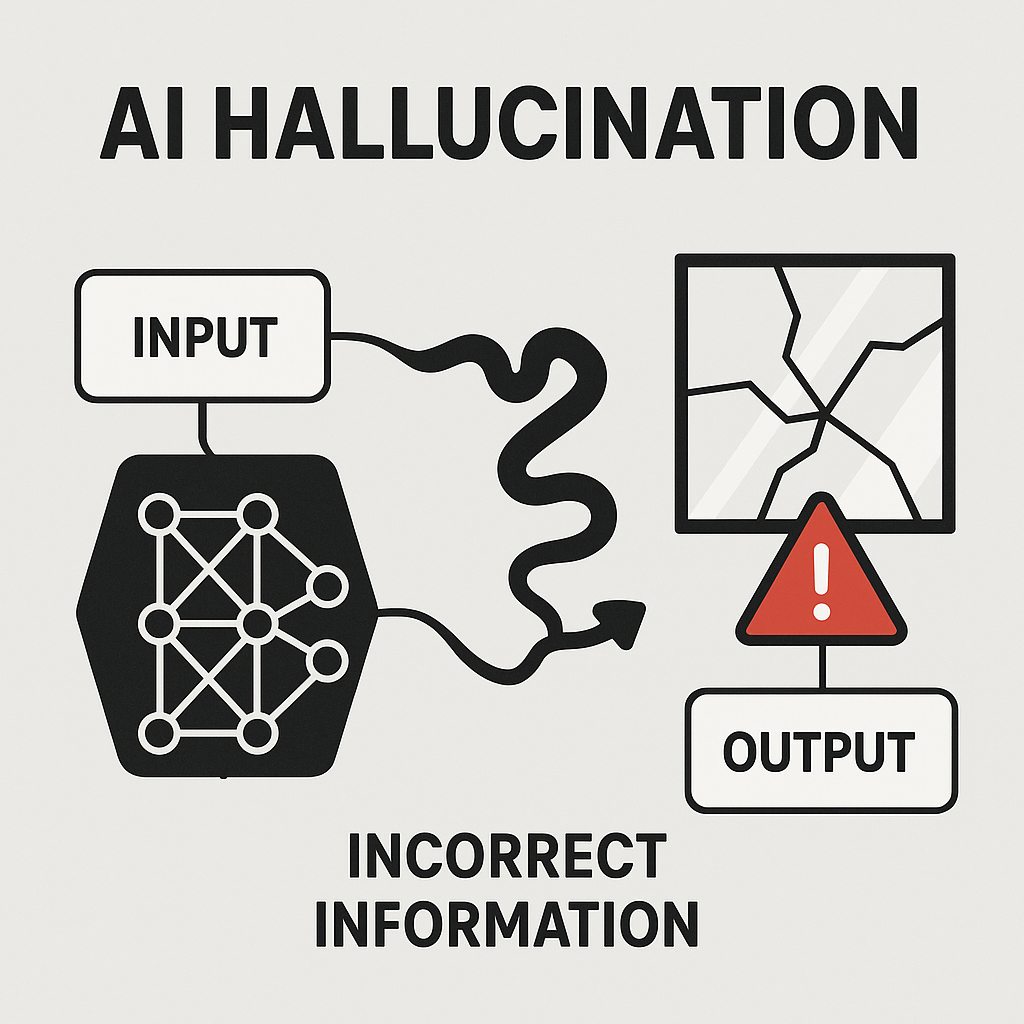
- AI幻觉:生成看似合理但与事实不符的内容,因训练数据偏差和模型不确定性等因素造成⁷⁸。
- 算法偏见:训练数据中的偏见可能被放大传播,影响客观公正¹³.
- 决策过程不透明:“黑箱”问题降低用户信任¹³.
- 数据隐私与安全¹³.
- 伦理困境:包括知识产权争议、数字鸿沟、市场垄断、高能耗等¹³⁵⁶.
AI“幻觉”与内容质量的挑战,其本质触及知识论的根本问题,迫使我们重新审视AI深度参与知识生产时代知识的验证标准和“真实性”含义⁵.
1.2 本文框架与导航:深度探索的路线图
本文旨在系统梳理AI浪潮下个人学习与知识组织的新范式,结构如下:
- 第二章:聚焦AI在知识生成领域的应用现状与核心问题,特别是“幻觉”问题⁷⁸。
- 第三章:深入探讨应对AI挑战的前沿技术与方法,如深度研究⁸⁹、推理模型¹⁴³⁸、自动化工作流¹²⁶²⁷²⁸、可信增强技术⁶³³.
- 第四章:分析AI对传统教育模式和学习理论带来的深远影响³⁸⁴⁷.
- 第五章:提出AI时代构建人机协同的学习与知识体系¹²⁶、培养批判性思维和AI素养¹⁶⁶⁸⁶⁹、推进知识治理¹⁵⁶⁶的关键策略。
- 第六章:探讨个人成长与知识治理的未来方向与建议¹⁵⁶⁶,并提供参考来源。
2. AI赋能与挑战:知识生成前沿的现实审视
AI技术,特别是生成式AI和LLMs,已深度渗透到学术研究和知识生产的各个环节,极大地提高了效率¹。尽管AI工具在文献综述、数据处理和代码生成方面潜力巨大²⁴⁵⁹,但其固有的缺陷也对知识生产的真实性、可靠性与学术诚信构成了严峻考验⁵⁶⁷⁸。
2.1 科研与写作的效率革命:生成式AI的价值与应用
生成式AI在提升科研与写作效率方面展现了巨大潜力:
- 文献检索与综述:AI工具可快速筛选、总结文献,如SciSpace和Litmaps²¹.
- 数据处理与分析:AI高效处理数据,发现模式,支持分析过程⁵⁹.
- 代码生成与调试:提升开发者效率,高达88%-126%⁴.
- 文本创作与润色:辅助草稿生成、语法校对、风格润色,如Paperpal和Jenni²¹.
- 可视化内容生成:AI能协助生成图表⁵⁹.
- 工作流程自动化:自动化内容标记、更新和维护,简化作者工作流程¹⁵⁹.
svg<svg width="600" height="250" xmlns="http://www.w3.org/2000/svg"> <!-- Title --> <rect x="10" y="10" width="580" height="30" fill="#009688" rx="5"/> <text x="300" y="30" text-anchor="middle" font-size="16" font-weight="bold" fill="#FFF">AI 辅助科研与写作流程图</text> <!-- Stages --> <rect x="20" y="60" width="100" height="40" fill="#FF9800" rx="5"/> <text x="70" y="85" text-anchor="middle" font-size="12" fill="#FFF">研究选题</text> <rect x="140" y="60" width="100" height="40" fill="#FF9800" rx="5"/> <text x="190" y="85" text-anchor="middle" font-size="12" fill="#FFF">文献检索/综述</text> <rect x="260" y="60" width="100" height="40" fill="#FF9800" rx="5"/> <text x="310" y="85" text-anchor="middle" font-size="12" fill="#FFF">数据分析</text> <rect x="380" y="60" width="100" height="40" fill="#FF9800" rx="5"/> <text x="430" y="85" text-anchor="middle" font-size="12" fill="#FFF">论文写作</text> <rect x="500" y="60" width="80" height="40" fill="#FF9800" rx="5"/> <text x="540" y="85" text-anchor="middle" font-size="12" fill="#FFF">评审/发表</text> <!-- AI Assistance --> <rect x="140" y="110" width="100" height="30" fill="#4CAF50" rx="3"/> <text x="190" y="130" text-anchor="middle" font-size="11" fill="#FFF">文献筛选/摘要</text> <rect x="260" y="110" width="100" height="30" fill="#4CAF50" rx="3"/> <text x="310" y="130" text-anchor="middle" font-size="11" fill="#FFF">模式识别/可视化</text> <rect x="380" y="110" width="100" height="30" fill="#4CAF50" rx="3"/> <text x="430" y="130" text-anchor="middle" font-size="11" fill="#FFF">草稿生成/润色</text> <rect x="380" y="150" width="100" height="30" fill="#4CAF50" rx="3"/> <text x="430" y="170" text-anchor="middle" font-size="11" fill="#FFF">引用管理/图表生成</text> <!-- Connections --> <line x1="70" y1="100" x2="70" y2="180" stroke="#9E9E9E" stroke-width="1" marker-end="url(#arrowEnd)"/> <line x1="70" y1="180" x2="140" y2="180" stroke="#9E9E9E" stroke-width="1"/> <line x1="140" y1="180" x2="140" y2="100" stroke="#9E9E9E" stroke-width="1"/> <line x1="190" y1="100" x2="190" y2="110" stroke="#9E9E9E" stroke-width="1" marker-end="url(#arrowEnd)"/> <line x1="190" y1="140" x2="190" y2="150" stroke="#9E9E9E" stroke-width="1"/> <line x1="190" y1="150" x2="260" y2="150" stroke="#9E9E9E" stroke-width="1" marker-end="url(#arrowEnd)"/> <line x1="310" y1="100" x2="310" y2="110" stroke="#9E9E9E" stroke-width="1" marker-end="url(#arrowEnd)"/> <line x1="310" y1="140" x2="310" y2="150" stroke="#9E9E9E" stroke-width="1"/> <line x1="310" y1="150" x2="380" y2="150" stroke="#9E9E9E" stroke-width="1" marker-end="url(#arrowEnd)"/> <line x1="430" y1="100" x2="430" y2="110" stroke="#9E9E9E" stroke-width="1" marker-end="url(#arrowEnd)"/> <line x1="430" y1="180" x2="430" y2="190" stroke="#9E9E9E" stroke-width="1"/> <line x1="430" y1="190" x2="500" y2="190" stroke="#9E9E9E" stroke-width="1" marker-end="url(#arrowEnd)"/> <defs> <marker id="arrowEnd" markerWidth="10" markerHeight="10" refX="9" refY="5" orient="auto"> <path d="M0,0 L10,5 L0,10 Z" fill="#9E9E9E" /> </marker> </defs> </svg>图1:AI辅助科研与写作流程图此流程图展示了AI在科研写作的各个阶段(选题、文献、数据、写作、评审)的具体辅助作用,体现了效率提升。
2.2 “幻觉”迷雾:AI虚构信息的本质、表现与深层影响
AI“幻觉”是模型生成看似合理实则不准确甚至虚构内容的问题,是AI在知识生成领域的核心挑战之一⁷⁸.
- 本质与成因:模型基于训练数据进行统计模式匹配,当超出数据范围或数据有偏差时可能生成虚假信息⁷⁸。模型缺乏事实核查能力或从外部信息源获取信息的能力⁷⁸。
- 表现形式:包括捏造知识点、逻辑错误、无根据捏造事实、甚至伪造参考文献⁷第八. 失真信息传播极具说服力⁷.
- 深层影响:影响信息真实性、加剧网络安全风险⁷。在学术界,导致错误信息传播、误导研究方向、损害研究可信度⁵⁶。在医疗等领域,可能导致误诊⁷。
2.3 真实性与诚信危机:AI时代知识质量判断与学术规范的挑战
AI生成内容的便捷性加剧内容真伪辨别难度,挑战传统同行评审和质量控制。过度依赖AI可能削弱学术诚信,引发剽窃和署名权问题⁵⁶。
- 内容真伪辨别困难:海量AI生成内容加剧筛选评估难度⁵⁶.
- 学术诚信面临新考验:AI可能助长抄袭,对知识产权、署名权归属带来困惑⁵⁶.
- 偏见固化与传播:训练数据偏见在生成内容中放大¹³.
- 缺乏透明度:算法“黑箱”使偏见难以监管²⁹.
- 知识论挑战:“真实性”定义受AI不透明性影响,挑战传统验证方法⁵。用户批判性能力和数字素养至关重要⁵。
3. 技术应对与范式创新:构建更可靠的AI辅助知识工作流
为提升AI生成内容质量和可靠性,优化人机协作,一系列新技术和新方法应运而生⁸¹⁴²¹²².
3.1 深度研究崛起:从表面搜索到综合分析与溯源⁸
“深度研究”AI能力旨在克服传统工具局限和AI表面化问题,自主进行多步信息查找、研究、分析,生成带引用的详细报告⁸⁹¹¹.
- 定义:AI自主制定研究计划、从多源信息检索/解读/聚合,利用推理模型产出带详细引用和思考链的报告⁸⁹¹¹.
- 代表性工具:OpenAI Deep Research⁸、Google Gemini Deep Research⁹¹¹²¹、Perplexity AI⁸玖.
- 优势:节省信息搜集时间,处理复杂问题,发现隐性信息,提高可溯源性⁸玖。OpenAI深度研究可生成博士生水平报告¹².
3.2 推理模型演进:AI“慢想”能力觉醒¹³¹⁴
推理模型旨在模拟人类“慢想”(System 2 Thinking),进行更审慎、步骤化处理信息,以弥补基础LLM类似人类“快思”(System 1 Thinking)在复杂推理时的易错性¹³¹⁴.
- System 1 vs. System 2:基础LLM类似System 1(快速、直觉),推理模型模拟System 2(慢速、审慎)¹³⁴⁰.
- 代表性模型:OpenAI o1/o3¹⁶¹⁷(擅长STEM,整合CoT¹⁶三十三³⁴)、DeepSeek R1¹⁸¹⁹(强化学习驱动,MoE架构¹⁸千九百)。
- 优势:模拟内部“思考”过程(CoT、任务规划、自我校正),提升逻辑性、准确性三十六³⁷³八.
3.3 神经符号AI融合:弥合神经网络与符号推理鸿沟²⁰²³
NSAI将深度学习的模式识别能力与符号AI的逻辑推理、可解释性结合²⁰²³²⁴²⁵,克服纯粹方法局限。RAG(检索增强生成)是NSAI的一种体现,通过结合外部知识库增强事实性²⁰²³三十三.
3.4 自动化工作流革新:编排、画布与自主代理¹²⁶²⁷²⁸²⁹³⁰³¹
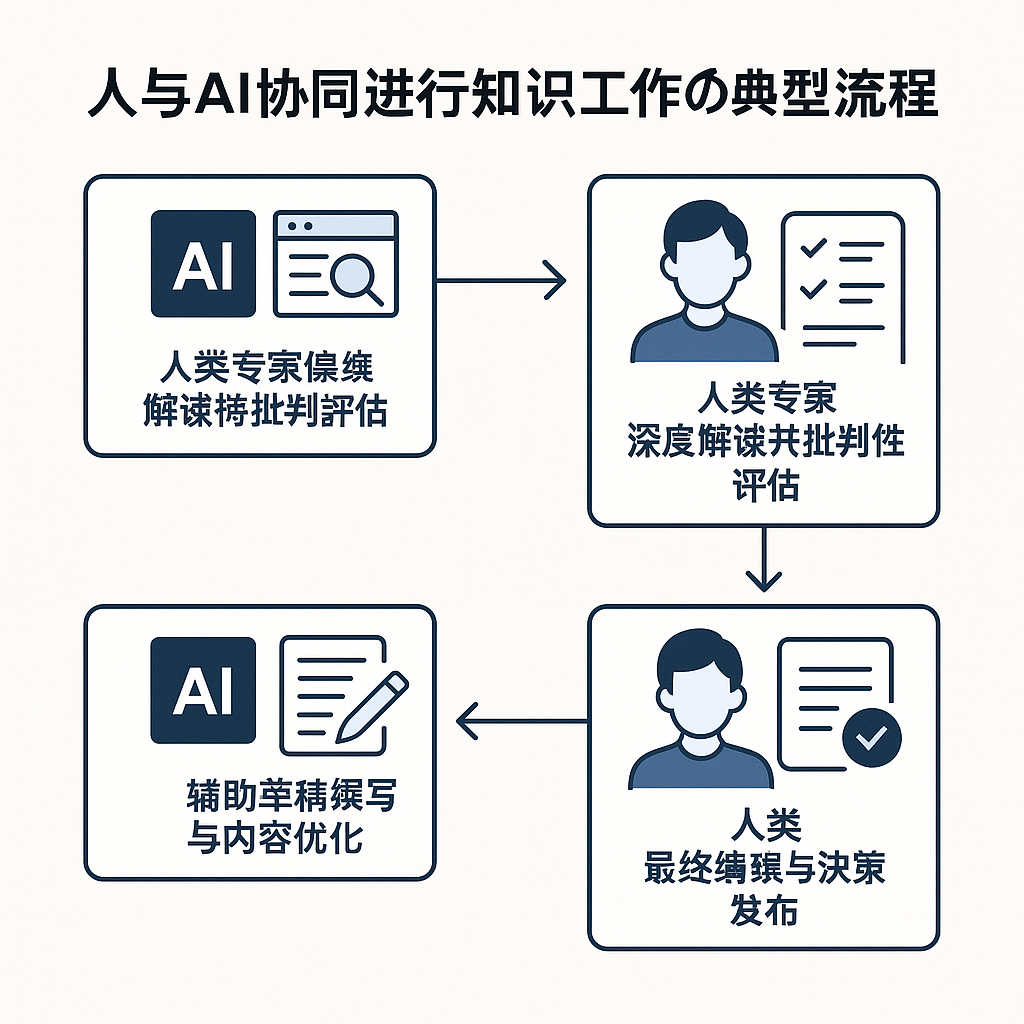
- 工作流编排与画布:组织AI工具形成自动化流程,可视化画布实现设计、管理、交互¹²⁶²⁷²八.
- 自主AI代理:具备一定自主规划、决策、执行能力¹²²⁹³¹. 如Manus AI²⁹³⁰、Flowith Infinite Agent²⁷³¹、Google Gemini Gems³². 使AI成为更主动、智能的协作伙伴¹²²⁹³¹.
- 人在回路:确保关键决策人工审核¹²二十八.
3.5 提升内容质量与降低幻觉技术策略⁶⁷³³.
- RAG:从外部可信知识库检索信息,显著降低幻觉³³⁴³.
- 提示工程与精调:精心设计指令(CoT¹⁶³³³四)引导模型,精调提升领域专业性³⁵.
- 检查审计验证:技术检测、人工审核、持续监控⁶³³,区块链溯源²⁴.
4. AI技术对教育模式与学习理论的深远影响
AI技术深刻影响教育模式和学习理论,触及知识传递、核心技能定义和个体认知重塑³⁸⁴⁷.
4.1 传统教育模式质变:个性化、定制化学习实现与挑战³⁴⁷
AI技术为实现真正个性化学习提供强大支撑³⁴⁷。但需警惕过度依赖风险⁵⁶。
- 赋能:个性化学习路径十三⁴七、自适应学习平台¹³³⁴七、智能辅导系统³⁴七、自动化评估³⁴七、多模态内容¹⁴七.
- 挑战:系统性整合需求⁴¹、偏见隐私安全问题⁴⁷、教育不公加剧²八、教师培训需求⁴七.
- 核心目标转变:强化批判性思维、AI工具应用能力、复杂问题解决能力⁵⁶。
svg<svg width="500" height="250" xmlns="http://www.w3.org/2000/svg"> <!-- Title --> <rect x="10" y="10" width="480" height="30" fill="#FF9800" rx="5"/> <text x="250" y="30" text-anchor="middle" font-size="16" font-weight="bold" fill="#FFF">AI 赋能个性化学习路径生成机制示意图</text> <!-- Student Profile --> <rect x="50" y="60" width="100" height="50" fill="#607D8B" rx="5"/> <text x="100" y="80" text-anchor="middle" font-size="11" fill="#FFF">学生画像</text> <text x="100" y="95" text-anchor="middle" font-size="9" fill="#FFF">(风格, 水平, 兴趣)</text> <!-- AI Analysis --> <rect x="200" y="60" width="100" height="50" fill="#3F51B5" rx="5"/> <text x="250" y="80" text-anchor="middle" font-size="11" fill="#FFF">AI 分析模块</text> <text x="250" y="95" text-anchor="middle" font-size="9" fill="#FFF">(算法, 模型)</text> <!-- Learning Resources --> <rect x="350" y="60" width="100" height="50" fill="#9C27B0" rx="5"/> <text x="400" y="80" text-anchor="middle" font-size="11" fill="#FFF">学习资源库</text> <text x="400" y="95" text-anchor="middle" font-size="9" fill="#FFF">(课程, 文献, 多媒体)</text> <!-- Personalized Path --> <rect x="200" y="160" width="100" height="50" fill="#00BCD4" rx="5"/> <text x="250" y="180" text-anchor="middle" font-size="11" fill="#FFF">个性化路径生成</text> <text x="250" y="195" text-anchor="middle" font-size="9" fill="#FFF">(内容, 顺序, 难度)</text> <!-- Feedback Loop --> <rect x="50" y="230" width="100" height="40" fill="#FF5722" rx="5"/> <text x="100" y="255" text-anchor="middle" font-size="11" fill="#FFF">学习反馈与调整</text> <!-- Connections --> <line x1="150" y1="85" x2="200" y2="85" stroke="#9E9E9E" stroke-width="1" marker-end="url(#arrowEnd)"/> <line x1="300" y1="85" x2="350" y2="85" stroke="#9E9E9E" stroke-width="1" marker-end="url(#arrowEnd)"/> <line x1="100" y1="110" x2="100" y2="160" stroke="#9E9E9E" stroke-width="1"/> <line x1="100" y1="160" x2="200" y2="160" stroke="#9E9E9E" stroke-width="1" marker-end="url(#arrowEnd)"/> <line x1="250" y1="110" x2="250" y2="160" stroke="#9E9E9E" stroke-width="1" marker-end="url(#arrowEnd)"/> <line x1="300" y1="210" x2="300" y2="250" stroke="#9E9E9E" stroke-width="1"/> <line x1="300" y1="250" x2="150" y2="250" stroke="#9E9E9E" stroke-width="1" marker-end="url(#arrowEnd)"/> <line x1="400" y1="110" x2="400" y2="185" stroke="#9E9E9E" stroke-width="1"/> <line x1="400" y1="185" x2="300" y2="185" stroke="#9E9E9E" stroke-width="1" marker-end="url(#arrowEnd)"/> <defs> <marker id="arrowEnd" markerWidth="10" markerHeight="10" refX="9" refY="5" orient="auto"> <path d="M0,0 L10,5 L0,10 Z" fill="#9E9E9E" /> </marker> </defs> </svg>图2:AI赋能个性化学习路径生成机制示意图该图展示了AI系统如何分析学生画像、利用学习资源库,生成和调整个性化学习路径,并通过反馈循环持续优化。
4.2 学习理论演进:认知与元认知发展的AI视角¹⁵³⁸
AI作为认知工具影响学习者处理信息和解决问题方式¹⁵³八. 学习理论需整合AI能力,促进高阶认知发展⁵。学习者元认知能力尤为重要⁵。从AI“思考过程”中学习³⁷.
svg<svg width="500" height="250" xmlns="http://www.w3.org/2000/svg"> <!-- Title --> <rect x="10" y="10" width="480" height="30" fill="#3F51B5" rx="5"/> <text x="250" y="30" text-anchor="middle" font-size="16" font-weight="bold" fill="#FFF">AI 时代个人核心能力模型图</text> <!-- Center --> <circle cx="250" cy="125" r="60" fill="#E0F2F7"/> <text x="250" y="120" text-anchor="middle" font-size="14" font-weight="bold" fill="#0288D1">个人赋能</text> <text x="250" y="140" text-anchor="middle" font-size="10" fill="#0288D1">(Adaptive & Collaborative)</text> <!-- Inner Circle - Core Capabilities --> <circle cx="250" cy="125" r="80" fill="none" stroke="#0288D1" stroke-dasharray="2,2"/> <text x="250" y="75" text-anchor="middle" font-size="12" fill="#3F51B5">批判性思维</text> <text x="200" y="170" text-anchor="middle" font-size="12" fill="#3F51B5">AI 素养</text> <line x1="250" y1="105" x2="250" y2="65" stroke="#3F51B5" stroke-width="1" marker-end="url(#arrowEnd)"/> <line x1="230" y1="150" x2="200" y2="160" stroke="#3F51B5" stroke-width="1" marker-end="url(#arrowEnd)"/> <!-- Outer Ring - Supporting Skills --> <circle cx="250" cy="125" r="110" fill="none" stroke="#4CAF50" stroke-dasharray="3,3"/> <text x="250" y="40" text-anchor="middle" font-size="12" fill="#4CAF50">有效提示工程</text> <text x="150" y="100" text-anchor="middle" font-size="12" fill="#4CAF50">信息验证</text> <text x="350" y="150" text-anchor="middle" font-size="12" fill="#4CAF50">跨学科学 习</text> <line x1="250" y1="95" x2="250" y2="50" stroke="#4CAF50" stroke-width="1" marker-end="url(#arrowEnd)"/> <line x1="170" y1="115" x2="160" y2="100" stroke="#4CAF50" stroke-width="1" marker-end="url(#arrowEnd)"/> <line x1="330" y1="140" x2="340" y2="150" stroke="#4CAF50" stroke-width="1" marker-end="url(#arrowEnd)"/> <defs> <marker id="arrowEnd" markerWidth="10" markerHeight="10" refX="9" refY="5" orient="auto"> <path d="M0,0 L10,5 L0,10 Z" fill="#9E9E9E" /> </marker> </defs> </svg>图3:AI时代个人核心能力模型图该图以同心圆结构展示了AI时代个人赋能所需的核心能力(批判性思维、AI素养)及支撑技能(提示工程、信息验证、跨学科学 习)。
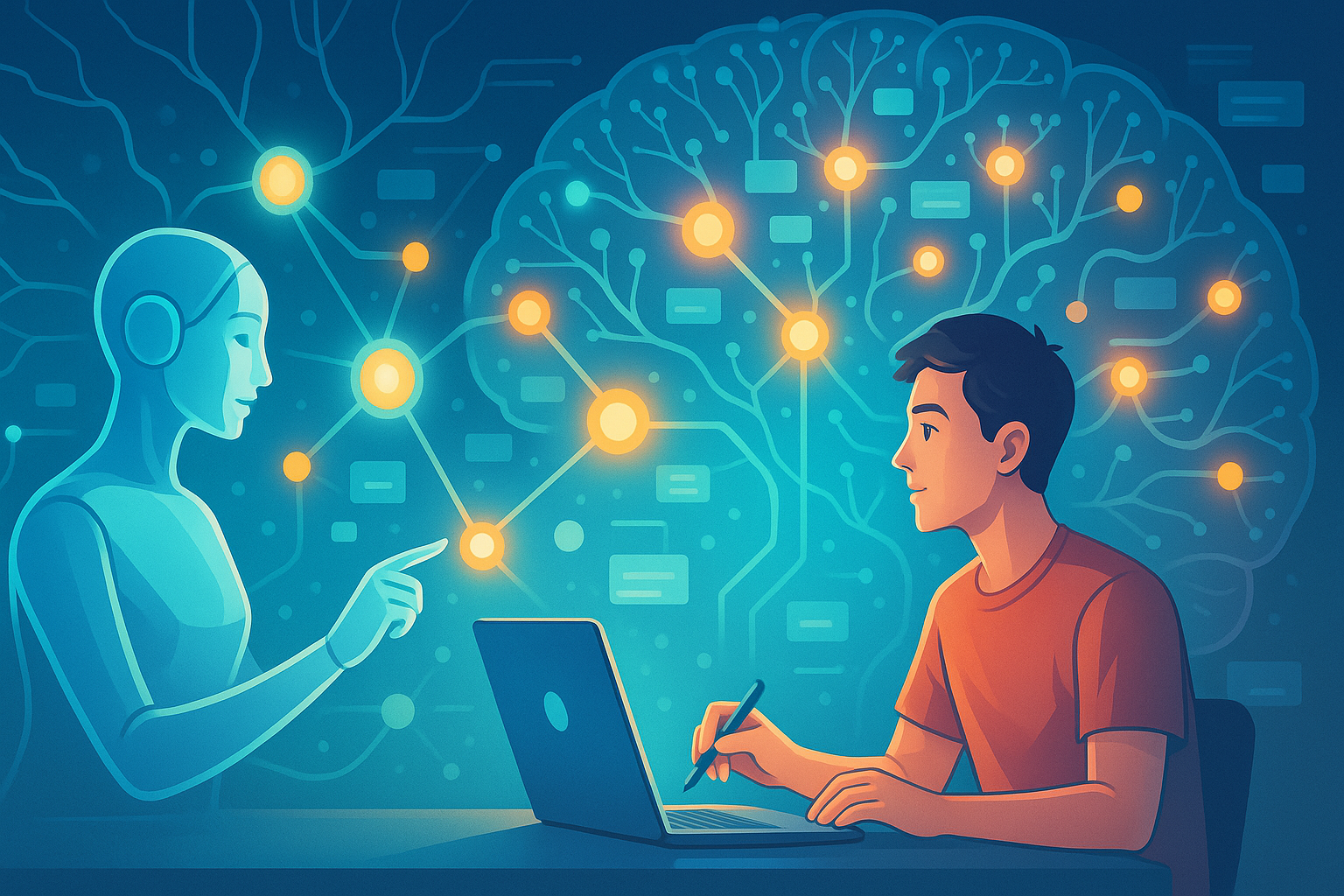
4.3 个人知识体系重构:从静态到动态、人机协同¹³³
AI挑战传统知识体系,需向动态、网络化、人机协同发展¹³³. 与权威数据源交叉验证,结合AI工具构建个人知识网络⁵.
svg<svg width="500" height="250" xmlns="http://www.w3.org/2000/svg"> <!-- Title --> <rect x="10" y="10" width="480" height="30" fill="#4CAF50" rx="5"/> <text x="250" y="30" text-anchor="middle" font-size="16" font-weight="bold" fill="#FFF">人机协同个人知识体系模型图</text> <!-- Core - Human --> <circle cx="150" cy="120" r="30" fill="#3F51B5"/> <text x="150" y="125" text-anchor="middle" font-size="12" font-weight="bold" fill="#FFF">人类认知</text> <!-- Core - AI --> <rect x="250" y="90" width="100" height="60" fill="#2196F3" rx="10"/> <text x="300" y="125" text-anchor="middle" font-size="12" font-weight="bold" fill="#FFF">AI 知识助理/工具</text> <!-- External Environment --> <rect x="100" y="180" width="300" height="40" fill="#9C27B0" rx="5"/> <text x="250" y="205" text-anchor="middle" font-size="12" fill="#FFF">外部知识环境 (文献、数据、网络)</text> <!-- Connections --> <line x1="180" y1="120" x2="250" y2="120" stroke="#673AB7" stroke-width="2" marker-end="url(#arrowEnd)"/> <line x1="150" y1="150" x2="250" y2="180" stroke="#673AB7" stroke-width="1"/> <line x1="300" y1="150" x2="300" y2="180" stroke="#673AB7" stroke-width="1"/> <line x1="150" y1="150" x2="150" y2="180" stroke="#673AB7" stroke-width="1"/> <line x1="350" y1="120" x2="400" y2="120" stroke="#673AB7" stroke-width="1"/> <line x1="100" y1="180" x2="100" y2="150" stroke="#673AB7" stroke-width="1"/> <!-- Internalization/Filtering --> <text x="250" y="170" text-anchor="middle" font-size="11" fill="#795548">批判性过滤/验证</text> <!-- Unique Human Capabilities --> <text x="150" y="80" text-anchor="middle" font-size="11" font-weight="bold" fill="#3F51B5">独有能力 (创造力, 伦理)</text> <!-- AI Enhanced Capabilities --> <text x="300" y="70" text-anchor="middle" font-size="11" font-weight="bold" fill="#2196F3">增强能力 (检索, 推理)</text> <defs> <marker id="arrowEnd" markerWidth="10" markerHeight="10" refX="9" refY="5" orient="auto"> <path d="M0,0 L10,5 L0,10 Z" fill="#673AB7" /> </marker> </defs> </svg>图4:人机协同个人知识体系模型图该图展示了人类认知与AI助手如何协同工作,从外部环境获取信息并经过批判性处理后融入个人知识体系,强调各自独特能力。
5. AI时代个人学习与知识组织的新范式:实践与策略
构建全新学习知识组织范式,强调人机协同、批判性思维培养、主动学习策略¹³².
5.1 人机协同:构建效率与可靠性兼备的知识系统¹²⁶
- 原则:人类主导,AI赋能¹⁵.
- 流程优化:AI辅助信息采集与草拟,人工核查深度加工¹⁵.
- 工具整合:有机使用AI工具构建高效知识系统¹²⁶.
- 协作智能:AI增强人类能力³⁰.
5.2 核心能力:批判性思维与AI素养的双轮驱动¹⁶⁶⁸⁶⁹
- AI素养:理解AI原理、能力与边界,认识风险¹⁶⁶⁸⁶九.
- 批判性思维:审慎质疑AI内容,探究来源、逻辑、证据,辨别偏见¹⁶hexyl 八hexyl九.
- 信息验证:实践交叉引用、事实核查等技能¹⁶hex四.
svg<svg width="500" height="250" xmlns="http://www.w3.org/2000/svg"> <!-- Title --> <rect x="10" y="10" width="480" height="30" fill="#3F51B5" rx="5"/> <text x="250" y="30" text-anchor="middle" font-size="16" font-weight="bold" fill="#FFF">AI 时代个人核心能力模型图</text> <!-- Center --> <circle cx="250" cy="125" r="60" fill="#E0F2F7"/> <text x="250" y="120" text-anchor="middle" font-size="14" font-weight="bold" fill="#0288D1">个人赋能</text> <text x="250" y="140" text-anchor="middle" font-size="10" fill="#0288D1">(Adaptive & Collaborative)</text> <!-- Inner Circle - Core Capabilities --> <circle cx="250" cy="125" r="80" fill="none" stroke="#0288D1" stroke-dasharray="2,2"/> <text x="250" y="75" text-anchor="middle" font-size="12" fill="#3F51B5">批判性思维</text> <text x="200" y="170" text-anchor="middle" font-size="12" fill="#3F51B5">AI 素养</text> <line x1="250" y1="105" x2="250" y2="65" stroke="#3F51B5" stroke-width="1" marker-end="url(#arrowEnd)"/> <line x1="230" y1="150" x2="200" y2="160" stroke="#3F51B5" stroke-width="1" marker-end="url(#arrowEnd)"/> <!-- Outer Ring - Supporting Skills --> <circle cx="250" cy="125" r="110" fill="none" stroke="#4CAF50" stroke-dasharray="3,3"/> <text x="250" y="40" text-anchor="middle" font-size="12" fill="#4CAF50">有效提示工程</text> <text x="150" y="100" text-anchor="middle" font-size="12" fill="#4CAF50">信息验证</text> <text x="350" y="150" text-anchor="middle" font-size="12" fill="#4CAF50">跨学科学 习</text> <line x1="250" y1="95" x2="250" y2="50" stroke="#4CAF50" stroke-width="1" marker-end="url(#arrowEnd)"/> <line x1="170" y1="115" x2="160" y2="100" stroke="#4CAF50" stroke-width="1" marker-end="url(#arrowEnd)"/> <line x1="330" y1="140" x2="340" y2="150" stroke="#4CAF50" stroke-width="1" marker-end="url(#arrowEnd)"/> <defs> <marker id="arrowEnd" markerWidth="10" markerHeight="10" refX="9" refY="5" orient="auto"> <path d="M0,0 L10,5 L0,10 Z" fill="#9E9E9E" /> </marker> </defs> </svg>图5:AI时代个人核心能力模型图该图以同心圆结构展示了AI时代个人赋能所需的核心能力(批判性思维、AI素养)及支撑技能(提示工程、信息验证、跨学科学 习)。
5.3 主动学习:与智能伙伴高效协作策略¹⁶⁶⁸
- 提示工程:掌握CoT等技巧¹⁶七十.
- 辅助学术技能:AI文献回顾、数据分析,需批判性验证十六.
- 个性化学习:利用AI规划和巩固学习²八.
- 持续关注:跟进AI技术与伦理发展¹⁶⁶⁶.
6. 未来展望与建议:智识增长的个人路径与知识治理的社会责任
AI技术带来变革,个人成长与知识治理面临新挑战机遇¹⁵⁶⁶.
6.1 个人成长:拥抱变革,构建适应未来人才画像¹⁵⁶⁶
- 拥抱变革:保持好奇心,探索新AI工具¹⁶⁶六.
- 跨学科学 习:打破壁垒,融合知识¹⁶六六.
- 独特价值:培养创造力、批判性思维等AI难复制能力¹⁵⁶六.
- 人文关怀:平衡技术与身心健康¹⁶⁶⁶.
6.2 知识治理:确保AI发展的伦理、责任与可持续¹⁵⁶⁶
- 数据质量与透明度:保障数据质量,推动XAI¹⁵.
- 偏见消减与真实性:检测缓解偏见,构建真实性验证溯源体系¹⁵六四³³³⁴.
- 学术诚信:制定AI伦理规范,探讨知识产权归属⁵⁶.
- 治理框架:多方参与(政府、机构、产业、社会、个体)协同治理¹⁵⁶⁶.
svg<svg width="600" height="250" xmlns="http://www.w3.org/2000/svg"> <!-- Title --> <rect x="10" y="10" width="580" height="30" fill="#4CAF50" rx="5"/> <text x="300" y="30" text-anchor="middle" font-size="16" font-weight="bold" fill="#FFF">AI 知识治理框架示意图</text> <!-- Center --> <circle cx="300" cy="125" r="50" fill="#E8F5E9" stroke="#4CAF50" stroke-width="2"/> <text x="300" y="130" text-anchor="middle" font-size="14" font-weight="bold" fill="#1B5E20">AI 知识生态</text> <!-- Governance Layers --> <circle cx="300" cy="125" r="80" fill="none" stroke="#FFC107" stroke-dasharray="3,3"/> <text x="400" y="110" text-anchor="middle" font-size="12" fill="#FF9800">政府监管</text> <text x="300" y="40" text-anchor="middle" font-size="12" fill="#FF9800">学术机构</text> <text x="200" y="110" text-anchor="middle" font-size="12" fill="#FF9800">产业界</text> <text x="300" y="210" text-anchor="middle" font-size="12" fill="#FF9800">社会公众/个体</text> <line x1="350" y1="125" x2="380" y2="110" stroke="#FFC107" stroke-width="1" marker-end="url(#arrowEnd)"/> <line x1="300" y1="175" x2="300" y2="200" stroke="#FFC107" stroke-width="1" marker-end="url(#arrowEnd)"/> <line x1="250" y1="125" x2="220" y2="110" stroke="#FFC107" stroke-width="1" marker-end="url(#arrowEnd)"/> <line x1="300" y1="75" x2="300" y2="50" stroke="#FFC107" stroke-width="1" marker-end="url(#arrowEnd)"/> <!-- Governance Elements --> <rect x="100" y="60" width="100" height="30" fill="#2196F3" rx="5"/> <text x="150" y="80" text-anchor="middle" font-size="11" fill="#FFF">数据质量</text> <rect x="400" y="60" width="100" height="30" fill="#2196F3" rx="5"/> <text x="450" y="80" text-anchor="middle" font-size="11" fill="#FFF">算法透明度</text> <rect x="100" y="180" width="100" height="30" fill="#2196F3" rx="5"/> <text x="150" y="200" text-anchor="middle" font-size="11" fill="#FFF">偏见消减</text> <rect x="400" y="180" width="100" height="30" fill="#2196F3" rx="5"/> <text x="450" y="200" text-anchor="middle" font-size="11" fill="#FFF">内容真实性</text> <defs> <marker id="arrowEnd" markerWidth="10" markerHeight="10" refX="9" refY="5" orient="auto"> <path d="M0,0 L10,5 L0,10 Z" fill="#9E9E9E" /> </marker> </defs> </svg>图6:AI知识治理框架示意图该图展示了AI知识生态由政府、机构、产业、社会/个体等不同层级主体共同治理,关注数据质量、透明度、偏见等关键要素。
6.3 结论:迈向人机共生,智能增强的未来知识图景
AI重塑知识生产与学习模式,挑战与潜力并存¹⁵¹⁴²⁹. 深度研究、推理模型等技术应对挑战⁸¹⁴²⁹. 个人需构建人机协同体系,培养批判性思维与AI素养¹⁶,采取主动学习策略⁴⁶⁶⁸. 未来,智能增强社会需多方协同治理¹⁵⁶⁶,确保AI伦理负责¹. 通过人机协同,推动知识创新²². 加速科学发现,促进人类福祉¹⁵²⁹.
参考文献
[1] Cox, A., & Thelwall, M. (n.d.). AI for Knowledge. [2] Manning. (n.d.). Data Analysis with LLMs. [3] (n.d.). Generative AI and research practice. [4] (n.d.). Generative AI for Cloud Solutions Architect. [5] (n.d.). LLMs and Generative AI for Developers. [6] (n.d.). Artificial Intelligence in Action: Real-World Applications. [7] (n.d.). Interpretability and Explainability in AI. [8] OpenAI. (n.d.). Deep research FAQ. Retrieved from https://help.openai.com/en/articles/10500283-deep-research-faq [9] Institute of AI Studies. (n.d.). What is Deep Research in AI? (Gemini,Perplexity and ChatGPT). Retrieved from https://www.instituteofaistudies.com/insights/what-is-deep-research-in-ai-gemini-perplexity-and-chatgpt [10] Google Gemini AI expands capabilities with new thinking and deep research models. (2025, April 17). The Daily CWRU. [11] Create detailed reports with Deep Research | Google Workspace Blog. (2025, April 9). Google Workspace Blog. [12] Diving into the New AI Reasoning Models. (n.d.). AI for Education. [13] Yao, Y., et al. (2025). From System 1 to System 2: A Survey of Reasoning Large Language Models. arXiv. [14] From System 1 to System 2: A Survey of Reasoning Large Language Models. (2025). arXiv. [15] Understanding System 1 & System 2 in AI Reasoning. (n.d.). Osstyn.co.uk. [16] OpenAI's o1 and o3-mini reasoning models now available through U-M GPT. (2025, April 22). Michigan Technology Community News. [17] Understanding the System 2 Model: OpenAI's New Approach to LLM Reasoning. (n.d.). Spheron Blog. [18] Understanding DeepSeek R1—A Reinforcement Learning-Driven Reasoning Model. (n.d.). Kili Technology. [19] deepseek-r1 Model by Deepseek-ai - NVIDIA NIM APIs. (n.d.). NVIDIA Build. [20] Unlocking the Potential of Generative AI through Neuro-Symbolic Architectures – Benefits and Limitations. (2025). arXiv. [21] How Artificial Intelligence is Reshaping Academic Research Workflows. (n.d.). Context.inc Blog. [22] Neurosymbolic AI: Bridging Neural Networks and Symbolic Reasoning for Smarter Systems. (n.d.). Netguru Blog. [23] Colelough, B. C., & Regli, W. (2025). Neuro-Symbolic AI in 2024: A Systematic Review. arXiv. [24] (PDF) Unlocking the Potential of Generative AI through Neuro-Symbolic Architectures: Benefits and Limitations. (n.d.). ResearchGate. [25] Neuro-Symbolic AI in 2024: A Systematic Review. (2025). arXiv. [26] AI Workflow for UI Design & Automation Services. (n.d.). Fuselab Creative. [27] Flowith | GenAI Works. (n.d.). GenAI.works. [28] AI orchestration: How to scale AI across your business. (n.d.). Zapier Blog. [29] Manus AI Explained: The Autonomous Chinese AI That's Making Waves. (2025, April 2). Upskillist Blog. [30] Manus AI - China's Fully Autonomous AI Agent. (2025, March 18). OpenCV. [31] Flowith AI Infinite Agent: Agentic AI with Infinite Steps and Contexts. (2025, May 19). APIdog Blog. [32] Announcing the latest AI capabilities in Google Workspace with .... (2025, April 9). Google Workspace Blog. [33] 10 Ways to Prevent AI Hallucinations [2025]. (n.d.). DigitalDefynd. [34] How to Prevent LLM Hallucinations: 5 Proven Strategies. (2025, May 7). Voiceflow Blog. [35] What Is AI Hallucination? How to Fix It. (n.d.). Chatbase. [36] System 2 Reasoning Capabilities Are Nigh: A New Frontier in AI Cognition. (n.d.). Indika AI Blog. [37] Reasoning Models, A New Era of Explainable AI. (2025, February 9). Jerome Etienne Blog. [38] What Are Reasoning Models? Inside AI That Thinks. (n.d.). VKTR.com. [39] LAMDASZ-ML/Awesome-LLM-Reasoning-with-NeSy: Latest Advances on Neuro-Symbolic Learning in the era of Large Language Models. (n.d.). GitHub. [40] Stop Overthinking: A Survey on Efficient Reasoning for Large Language Models. (n.d.). TMLR. [41] Neuro Symbolic AI. (n.d.). ASU Neuro-Symbolic AI. [42] Google rolls out Deep Research feature for Gemini 2.5 Pro Experimental users. (n.d.). NDTV Profit. [43] Google Cloud. (n.d.). What are AI hallucinations?. Retrieved from https://cloud.google.com/discover/what-are-ai-hallucinations
贡献者
 pansin